
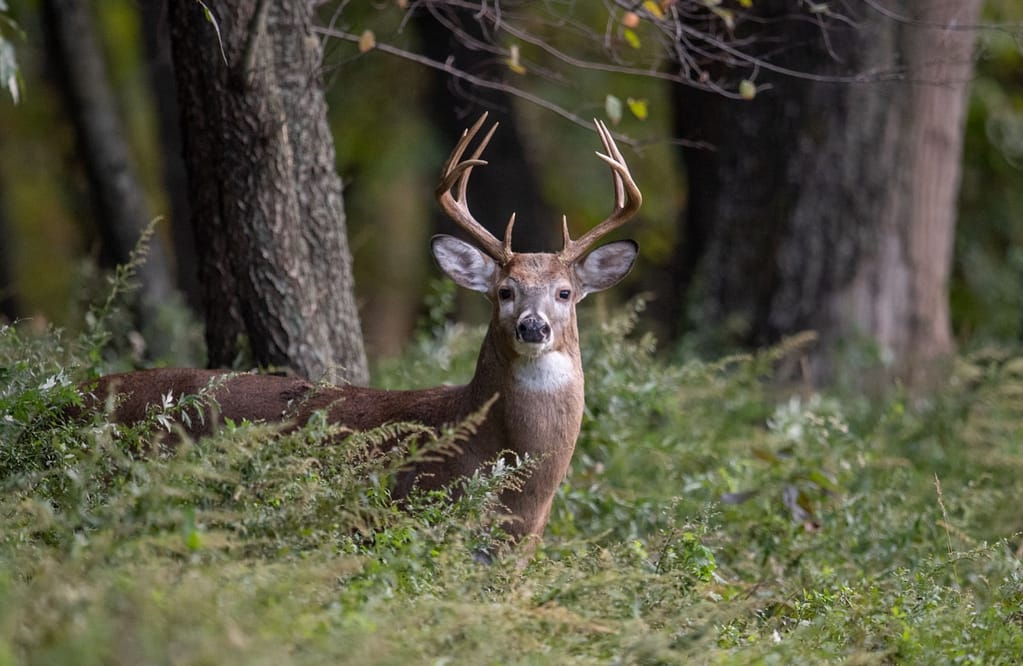
Most reforestation conversations focus on the usual suspects: climate change, soil degradation, invasive species. Deer rarely make the list. A long-term study out of Cornell University, published in PLOS One on February 16, 2026, suggests that’s a serious oversight. Researchers tracked 12 experimental plots on abandoned agricultural plots near Ithaca, NY for 18 years — half fenced off from deer, half left open. The results weren’t subtle. Virtually no trees survived in the open plots. Every single fenced plot grew into a forest. Kevin Loewen considers this one of the most important and underreported pieces of the tree health and ecosystem recovery conversation right now.
What the Study Actually Found
Cornell researchers Anurag Agrawal and Antonio DiTommaso launched the experiment in 2005 on fallow areas — the kind of abandoned farmland that, under the right conditions, should naturally grow back into forest. The fenced plots used 2.5-meter woven wire enclosures that blocked deer but let smaller animals and birds pass freely. Eighteen years later, all six fenced plots had established trees. The open plots had almost none.
Deer cut the abundance of woody plants in half and consistently prevented saplings from gaining any real foothold. The pattern was straightforward: a small tree would begin to sprout, deer would browse it down to nothing — especially targeting woody stems through winter — and it never recovered. There’s an interesting wrinkle, though. Deer actually boosted the diversity of smaller ground-level plants and weeds by stopping any single species from crowding out the others. So the open plots weren’t barren. They just had no trees.
Why Deer Pressure Is Worse Than Most People Realize
The Ithaca study area had an estimated 39 deer per square kilometer. That’s roughly ten times the density recorded before European colonization. And this isn’t a quirk of one upstate New York county — white-tailed deer overpopulation is a widespread reality across much of the eastern U.S.
The scale of the missed opportunity is significant. New York State alone has around 1.7 million acres of abandoned agricultural areas that could, in theory, regenerate into forest naturally. State and federal climate programs are counting on exactly that kind of passive regrowth. At current deer densities, it’s not happening. What makes this especially tricky is that affected area doesn’t look damaged. It’s green. Deer-tolerant weeds and shrubs fill in the gaps, giving the impression of a recovering ecosystem while tree regeneration is essentially absent underneath.
What This Means for Tree Planting and Stewardship
Kevin Loewen has long made the case that planting a tree and protecting a tree are entirely different undertakings. This study puts 18 years of hard data behind that distinction. Species selection and soil quality still matter enormously — but neither means much in an area where deer will browse every sapling into the ground before it has a chance.
The researchers are direct about it: active management is required. Passive planting won’t cut it where deer are abundant. Practical options range from physical fencing (the most reliable solution, though costly) to slash walls built from timber harvest debris, which early research suggests can be constructed for roughly one-third the cost of traditional fencing. Targeted deer population management, done in coordination with wildlife agencies, is another lever. None of these are simple, but all are more effective than planting and hoping. This challenge isn’t limited to rural reforestation projects either. Urban and suburban green spaces often have the densest, least-managed deer populations of all.
The Bigger Takeaway
Ecological recovery has never been just about what goes into the ground. It’s about every pressure acting on that ground — visible or not. For anyone running or supporting tree planting programs, the question “are deer a factor here?” belongs on the checklist right alongside species selection, soil health, and watering schedules.
Eighteen years of data delivered a message that’s hard to argue with: a fence made all the difference. Not better seeds, not richer soil, not a different species. A fence. That’s worth sitting with before the next seedling goes in the ground — because the first question might not be what you’re planting, but what’s going to eat it.

Leave a Reply